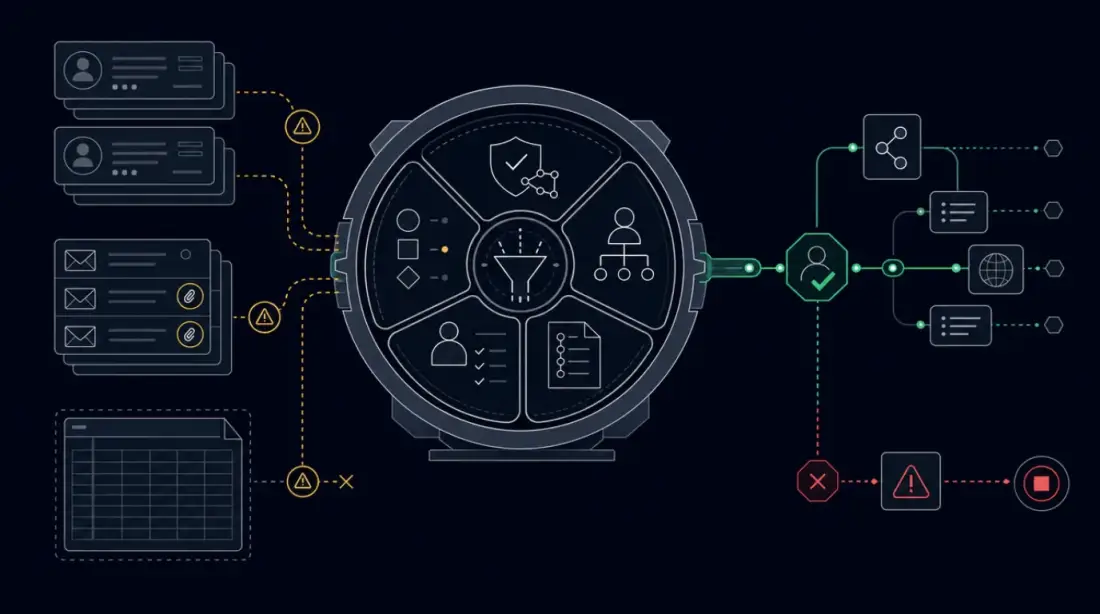
Shadow AI Inventory: How SMEs Turn Unapproved AI Into Controlled Automation
Unplanned AI use is already inside many teams. This guide shows SMEs how to map tools, data flows, owners, and review points before scaling automation.
Contents
Unplanned AI use is already inside many teams. This guide shows SMEs how to map tools, data flows, owners, and review points before scaling automation.
Share this article
The quiet AI rollout already happened
The official start of AI inside a company rarely looks like a board presentation. It often starts on a normal workday: a project lead summarizes customer emails in a free AI tool. Marketing uploads an old service description to draft a proposal faster. Operations uses an AI feature that suddenly appears inside a SaaS product. Nobody calls it an AI initiative, but company knowledge is already moving through AI systems.
That is where shadow AI begins: unapproved or unmapped AI use across public chatbots, SaaS copilots, browser extensions, meeting assistants, automation platforms, IDE helpers, and small internal scripts. The problem is not that employees look for better tools. The problem is that leaders, IT, and process owners can no longer answer which data enters which tool, who reviews outputs, and which path is officially approved.
A 2025 1Password survey of desk-based knowledge workers across several countries, including Germany, reported that 27 percent of German respondents used unapproved AI tools at work. Because this is a vendor source, it should not be treated as a universal SME benchmark. It is still a useful warning signal: AI adoption does not grow only through central procurement. It also grows wherever the approved process is slower than the need.
What shadow AI really means for a small business
Shadow AI is more than another form of shadow IT. With ordinary SaaS sprawl, the issue is often that data sits in too many tools. AI changes the pattern because prompts, uploaded files, generated outputs, and model-connected actions can create new decision paths. A draft can become a customer email. A summary can influence prioritization. An automation can turn an incoming message into a task, a ticket, or a response.
That means the question "Which tools did we buy?" is no longer enough. A useful inventory must also include embedded AI features: CRM suggestions, support classification, meeting transcripts, IDE assistants, browser plugins, LLM nodes in n8n or Make, internal scripts with API keys, and AI features inside office or project-management software.
The EU AI Act is governance context here, not legal advice. Article 4 on AI literacy has applied since 2 February 2025. The European Commission describes AI literacy as a context-based ability for staff and others who use AI systems on behalf of a company, not as a single fixed certificate. That makes an inventory practical: it connects training to concrete tool rules, data classes, and review points.
If you treat shadow AI only as employee misconduct, you miss the stronger signal. Unofficial AI use shows where work is too slow, fragmented, or unclear today. It is demand for automation. A good inventory does not punish that demand. It translates it into visible, controlled workflows.
The hidden cost of unmapped AI use
The first cost is rarely dramatic. It appears as rework. A proposal draft uses an outdated service description. An AI summary misses a constraint. A support response sounds confident but promises something the team cannot deliver. Each correction costs time, and each missed correction weakens trust.
The second cost is data uncertainty. Customer data, employee data, finance information, contracts, source code, and internal strategy do not belong in arbitrary AI tools just because the input box is convenient. The 1Password source reports company data, customer notes, and employee data being shared in AI contexts. Proofpoint defines shadow AI as use of AI tools, applications, and services without appropriate IT approval, oversight, or security review. Again, vendor sources need caveats, but their risk categories are useful for building the inventory.
The third cost is management drag. Without a map, nobody can reliably say which tools are used, which data classes are involved, who owns the workflow, which outputs can reach customers, or how a flawed workflow can be stopped. Leaders then make AI decisions by instinct: broad bans or blind approval. Both are weak operating models.
A planning model makes the cost easier to see. Imagine a 45-person services company. Twelve employees use AI weekly, and four recurring workflows appear informally: inquiry preparation, proposal drafting, meeting summaries, and support replies. If each person loses only 30 minutes a week to rework, tool searching, or duplicate checks, that is six hours per week. This is not a benchmark. It is a conservative model that shows how small shadow processes create an operating tax before any incident occurs.
The five-question AI inventory
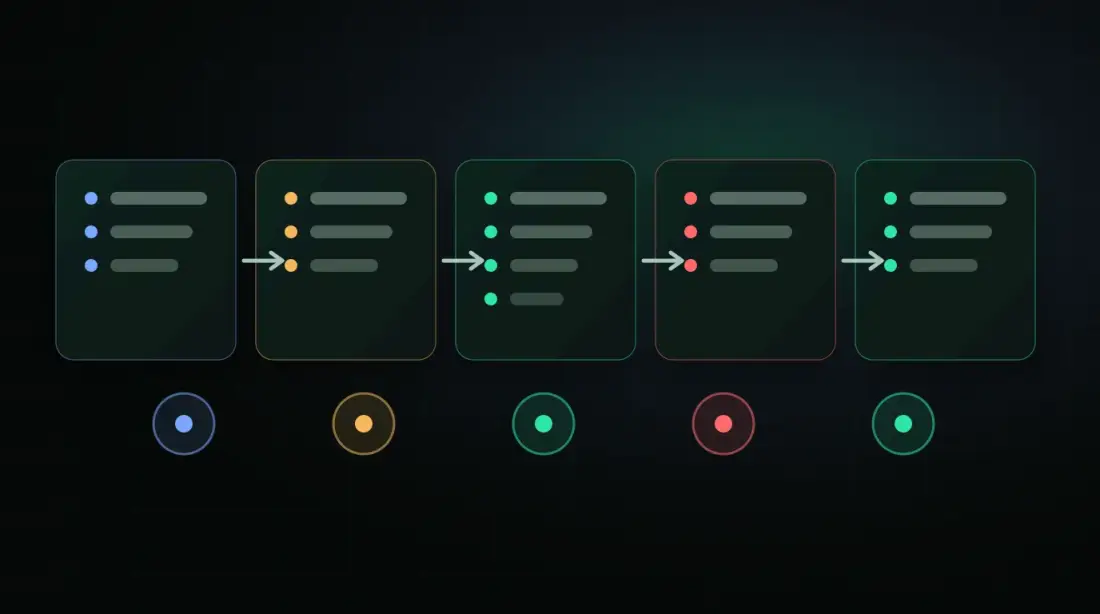
A shadow AI inventory has to be lighter than the workaround, otherwise teams will avoid it. Start with five questions. Together, they create a simple operating map: tool, data, owner, decision impact, and control.
Which tools are being used?
Include public AI tools, SaaS-native copilots, browser extensions, automation platforms, IDE assistants, meeting tools, and internal scripts. Ask about AI features that "just appeared" in existing tools. Embedded features are often invisible in procurement lists.
What data enters each tool?
Assign each use case to a data class: public, internal, customer, employee, finance, contract, source code, or strategy. The classification does not have to be perfect on day one. What matters is that the team knows which inputs are harmless and which require an approved path before any AI use.
Who owns the workflow?
A tool without an owner becomes risk. Name a business owner, a technical owner, a reviewer, and an escalation path. "The department" is not enough. If an AI output is wrong, someone must be able to stop, review, and correct the workflow.
Which outputs can affect customers or decisions?
Separate internal drafts from customer-facing messages, HR, finance, contract, and operational decisions. Brainstorming an internal outline needs different controls than drafting a customer reply or supporting a hiring decision.
How can the company stop, export, or audit it?
Sovereignty shows up in the stop button. Are there logs? Can data be exported? Where are API keys stored? Which accounts are personal, and which belong to the company? Can the team show which source informed an output? If these questions remain unanswered, the workflow is not ready to scale.
From inventory to one approved AI workflow
The inventory is not the destination. It should reveal the first official path. The OECD's 2026 D4SME survey covers a non-representative sample of more than 2,000 SMEs in 12 OECD countries and reports that AI adoption is growing, often through ready-made products, while secure and targeted integration into operations remains uneven. Time, maintenance costs, skills, and cybersecurity remain barriers. That argues against a large AI program as the first move. It argues for one workflow where demand already exists.
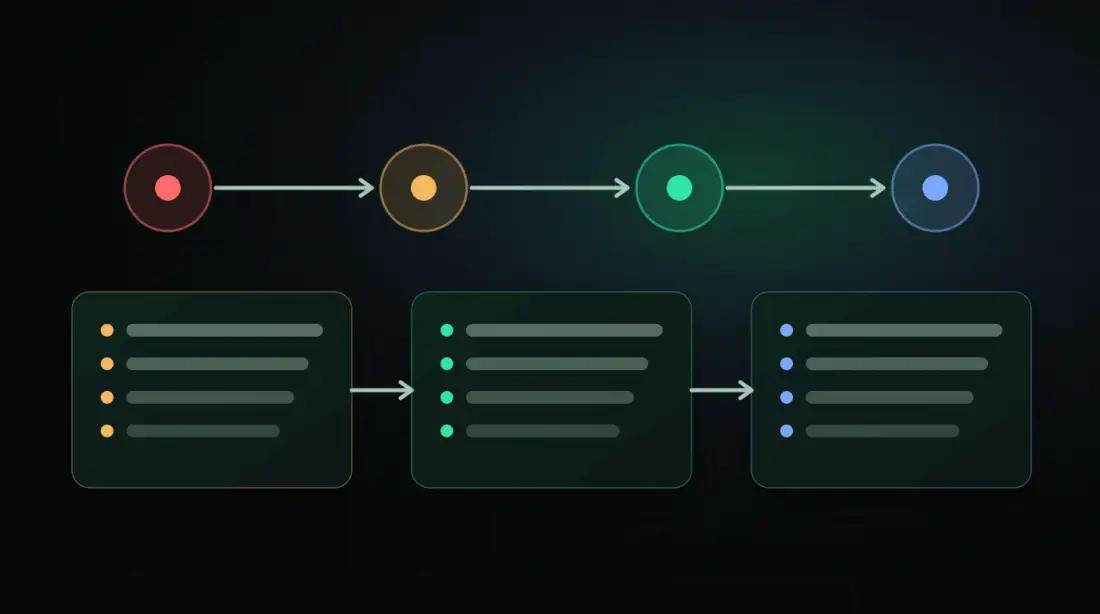
Planfold's method fits that sequence. Plan means mapping the current reality: tools, data classes, owners, and risky patterns. Unfold means building the approved path: approved sources, access boundaries, human review, and logs. Resonate means operating the workflow: reviewing correction rate, response quality, usage, incident signals, and team trust.
A strong candidate is inquiry triage. Many B2B service companies receive requests through website forms and email. Staff copy messages into AI tools to draft replies faster. A controlled Planfold-style workflow looks different: an internal intake queue, approved service knowledge, classification, draft response, missing-question checklist, human review, logged source references, and no automatic customer commitment.
The realistic outcomes are not "AI replaces sales." They are more concrete: faster first response, fewer inconsistent promises, clearer data boundaries, and a reusable pattern for proposal preparation, support classification, or meeting-to-task workflows. The value comes from the boundary.
Governance should be lighter than the workaround
Many SMEs fear that AI governance immediately means enterprise bureaucracy. It does not have to. The European Commission's AI literacy Q&A says there is no one-size-fits-all training format, no general certificate requirement, and no Article 4 requirement for a dedicated AI officer or governance board. For companies, that does not mean "do nothing." It means start proportionately, in context, and small.
The lean version is a one-page rule, an approved tool list, data classes, review rules, an owner map, and a feedback path. Employees should know which data never goes into public tools, which tasks are allowed through approved AI paths, and when a human review is mandatory. These rules become effective when the approved path is better than the private shortcut.
A ban can be necessary when data risk, contractual terms, or tool conditions are unclear. As a lasting strategy, it is weak. UpGuard's 2025 survey reports that many employees find ways around blocks. This is also a vendor source and should be read with caution, but the operational point is plausible: if the safe path is impractical, the shadow path remains attractive.
What to do this week
Block 30 minutes with the people closest to customers, proposals, support, operations, and IT. Do not ask for a perfect tool list. Ask which tasks AI already helps with or should help with. That gives you the first candidate list.
Then build a simple table: tool, task, data class, owner, customer impact, review point, log or export path. Mark red for use with customer, employee, finance, contract, or source-code data without an approved path. Mark green for internal drafts based on public information. Everything in between needs a decision.
Choose one workflow, not ten. Inquiry triage, proposal preparation, meeting summaries, and support classification are good candidates when they already happen informally. Build one approved path with approved sources, human review, and simple logging.
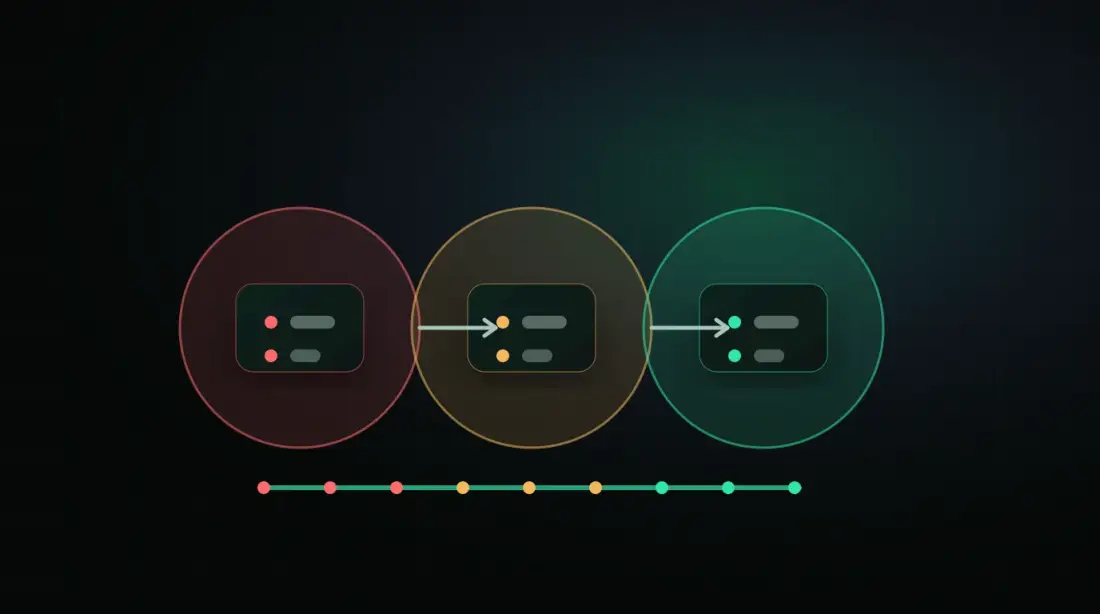
Planfold can support this path as a care-free package: first the map, then the first approved workflow, then operations, monitoring, and improvement. We do not promise legal advice or automatic compliance. We build the digital machine that makes AI use explainable, bounded, and improvable.
Plan. Unfold. Stay Sovereign.
Related Posts
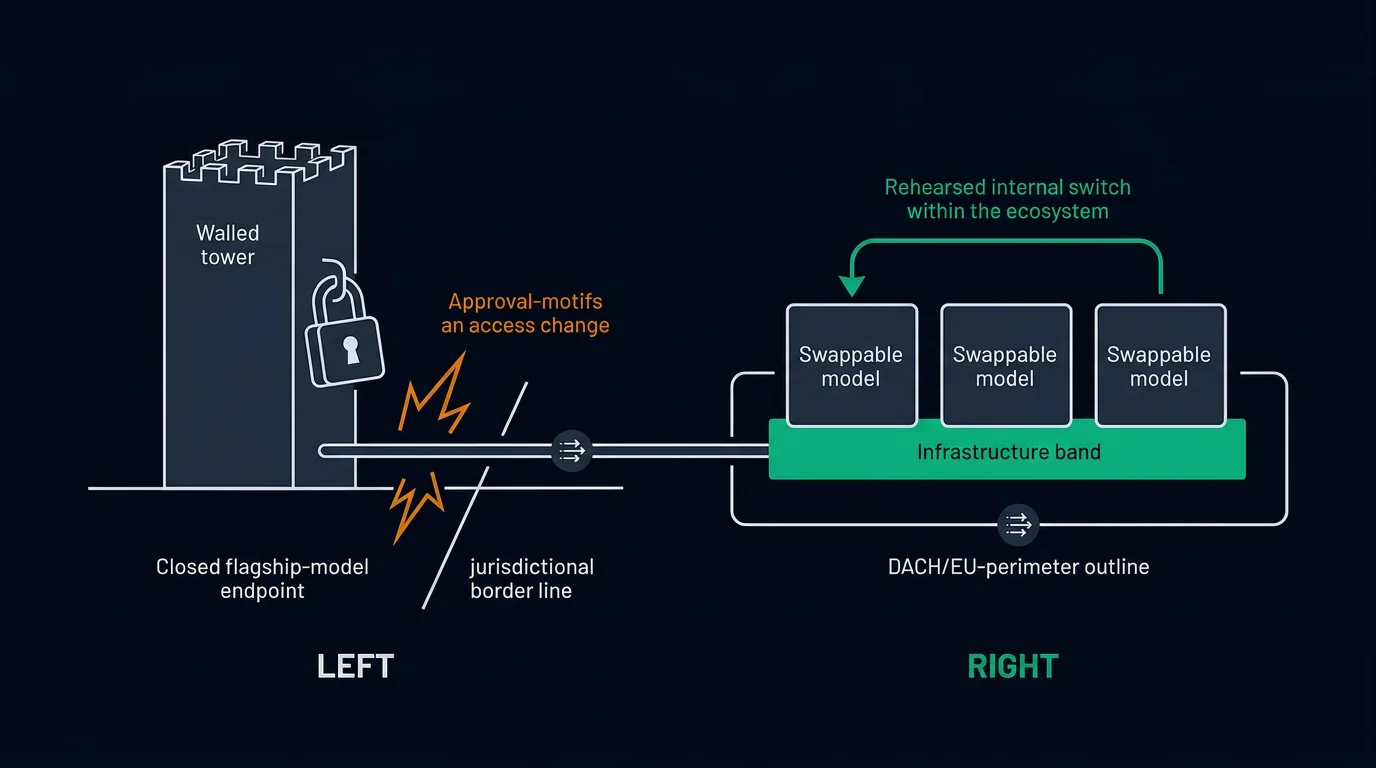
When a Foreign Government Gates Your AI Access: Sovereign AI Procurement as a Board-Level Risk for SMEs
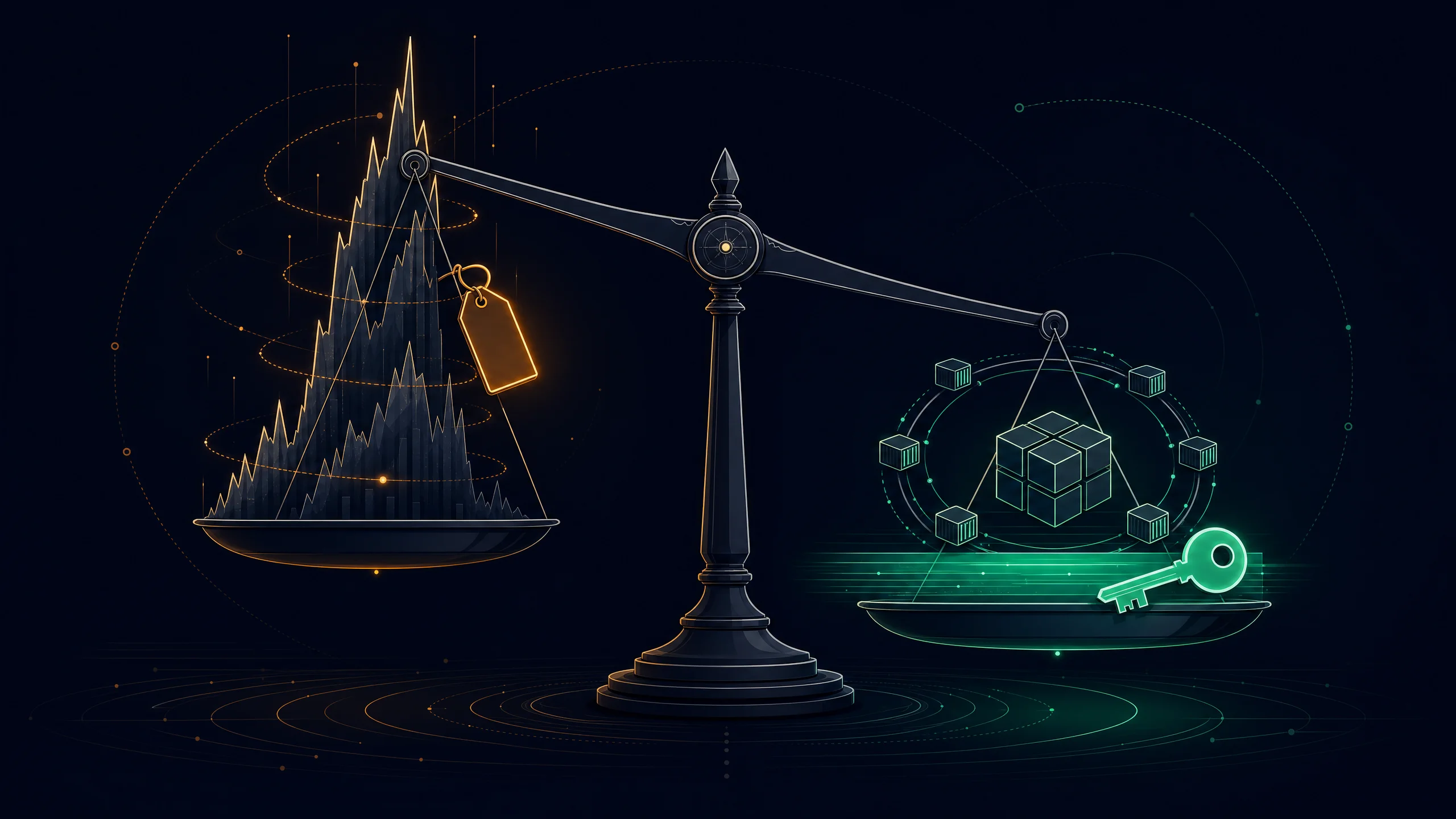
The Economics of Open-Weight AI: Why Self-Hosting Now Makes Business Sense for SMEs