The Sovereign Digital HQ: Your Business Brain for the AI Era
AI only becomes useful when business knowledge, workflows, and data flows are reliable. Here is how SMBs can build a sovereign digital headquarters with control, automation, and an exit key.

Contents
AI only becomes useful when business knowledge, workflows, and data flows are reliable. Here is how SMBs can build a sovereign digital headquarters with control, automation, and an exit key.
Share this article
The moment AI becomes an operations question
The question often appears in an ordinary business moment. A customer is waiting for a proposal, three people are looking for the latest service description, the CRM says something different from the shared spreadsheet, and someone asks: "Could AI prepare this for us?"
The honest answer is: maybe. But not if the AI receives the same conflicting sources your team already struggles with. Not if nobody can say which service description is current, who approves exceptions, or which customer data may live in which system. At that point, AI is no longer mainly a model question. It is an operations question.
For German businesses, this is no longer a fringe topic. Bitkom reported in March 2026 that 41 percent of companies with at least 20 employees were already using AI, while another 48 percent were planning or discussing it. At the same time, data protection requirements, skills shortages, and technical security requirements remain major digitalization barriers. The direction is clear: AI is moving into day-to-day work, but the operational foundation often lags behind.
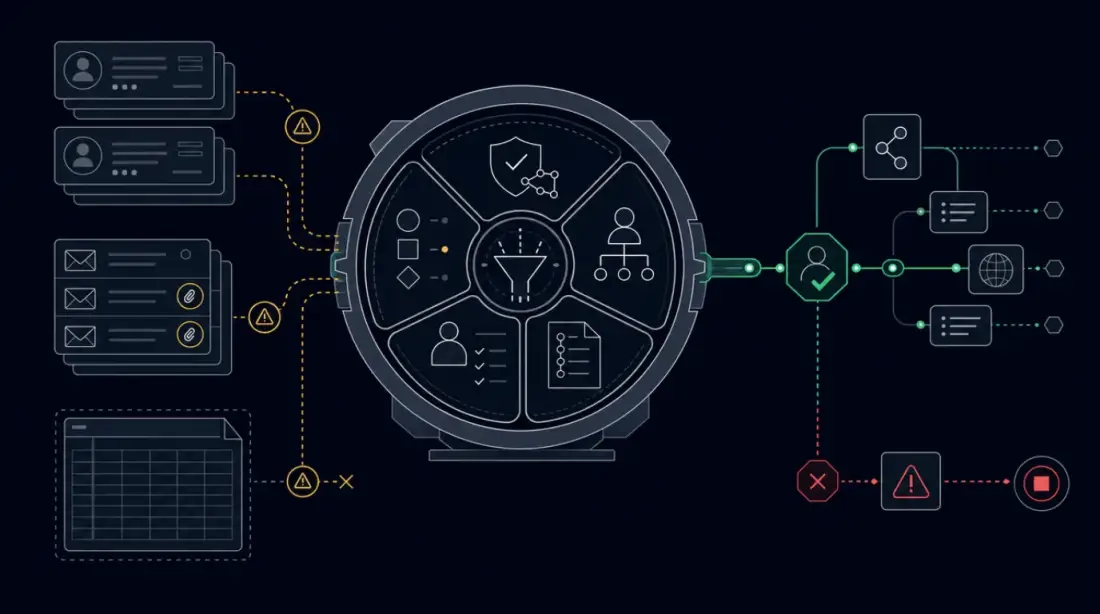
That is why companies need a sovereign digital headquarters. It is not another dashboard. It is the operating layer where business knowledge, workflows, data flows, accountability, and automation come together. Only then can AI do more than produce polite text drafts.
What a digital headquarters must actually do
A digital headquarters is the working foundation of the business in technical form. It answers questions that otherwise get re-argued every week: Which source is authoritative? Who owns this workflow? Which data may move where? Which automation is running in the background? Where does a human review the output before anything reaches a customer?
That makes it different from an intranet, CRM, document folder, or AI chat window. Each of those tools can be a component. The headquarters is the connecting layer: it makes the relationship between knowledge, systems, and work visible.
This matters especially for SMBs because they rarely have an internal platform team. The OECD's 2026 D4SME survey describes rising AI adoption among SMEs, while targeted, secure integration into business operations remains uneven. Time, maintenance costs, skills gaps, and cybersecurity are still practical barriers. That matches what many operators experience: buying the tool is fast. Running it reliably is the hard part.
A credible digital headquarters needs at least six elements:
| Layer | Business question | Technical control | Why it matters |
|---|---|---|---|
| Knowledge | Which source is current? | Source status, owner, freshness date | Prevents answers from stale documents |
| Processes | How does the workflow really run? | Process map, states, handoffs | Makes automation inspectable |
| Data flows | Which data moves where? | Data-flow map, system inventory | Reduces shadow copies and blind spots |
| Permissions | Who may see and change what? | Roles, data classes, secrets inventory | Protects customer, finance, and HR data |
| Control | When does a human decide? | Approvals, logs, escalations | Keeps accountability visible |
| Portability | How do we exit? | Export paths, documentation, code and workflow ownership | Prevents silent lock-in |
This is deliberately practical. AI does not need theater. It needs reliable context.
Why AI without business memory becomes a risky shortcut
AI can polish language. It can detect patterns, summarize documents, and draft recommendations. It cannot automatically decide which internal knowledge is valid, confidential, or outdated. If the business does not have a reliable memory, AI becomes a fast shortcut through unclear processes.
The risk starts with small mistakes. A proposal draft uses an old service description. An internal answer mixes project status with billing status. An inquiry is prioritized incorrectly because the AI sees the message text but not current capacity or customer history. Individually, these mistakes may look manageable. In automated workflows, they repeat.
Bitkom's 2025 AI research named common barriers: legal uncertainty, missing technical know-how, missing staff resources, data protection requirements, concern about data reaching the wrong hands, poor explainability, low output quality, and lack of usable data. These are not abstract objections to AI. They describe the missing building blocks of a digital headquarters.
Sensitive information is the clearest example. Bitkom warned in April 2025 that data entered into free AI offers may often be used for provider training and further provider-side use. That does not mean every free tool is automatically unlawful or unsafe. It does mean customer data, employee data, contracts, calculations, health information, and trade secrets need clear rules before they enter AI workflows.
Shadow AI is also a live governance problem, not a hypothetical one. Bitkom reported in October 2025 that private AI tools were already being used for work in German companies: sometimes widely, sometimes in individual cases, sometimes only suspected. The answer is not to ban useful tools by default. The better answer is to make the approved path easier than the improvised path.
EU AI Act requirements depend on the company’s role and the system’s purpose. Check the Commission’s current overview for time-sensitive statements. A technical inventory should record systems in use, data access, responsibilities and human review.
Warning signs that your business is not AI-ready yet
AI readiness does not mean perfection. It means the most important knowledge and work flows are stable enough for automation to support them without blurring responsibility. If the signals below feel familiar, architecture work should come before deeper AI rollout.
| Warning sign | What it means in daily work | What to clarify first |
|---|---|---|
| No tool and data map | Nobody can reliably say where customer, project, or finance data lives | System inventory and data-flow map |
| No workflow owner | A workflow runs, but nobody is accountable for it | Owner, escalation, change process |
| Conflicting documents | Proposals, FAQs, or SOPs exist in multiple versions | Valid source, archive rule, review rhythm |
| Unknown automations | n8n flows, Zapier zaps, scripts, or macros run without documentation | Workflow inventory, credentials, monitoring |
| Manual data copying | Teams paste sensitive data between tools and AI windows | Approved input paths and data classes |
| No exit plan | A critical SaaS workflow would be hard to migrate | Exports, open formats, replacement path |
One warning sign is especially common: AI is being tested for marketing, support, or customer contact, but there is no reviewed source base for product, service, or policy answers. The company is improving the surface before the foundation is ready.
Unclear risk classification also creates friction. If nobody can say whether an AI-assisted workflow is only internal preparation, may trigger transparency expectations, or needs deeper expert review, the topic either stalls or moves underground. Both are poor outcomes. A digital headquarters makes those questions visible before they become incidents.
The simplest test is this: for a critical workflow, can you explain within ten minutes which systems are involved, what data flows, who owns it, which automation runs, and how you would stop, review, or export the workflow? If not, AI is not the next step. The map is the next step.
Technical deep dive: how a sovereign business brain is built
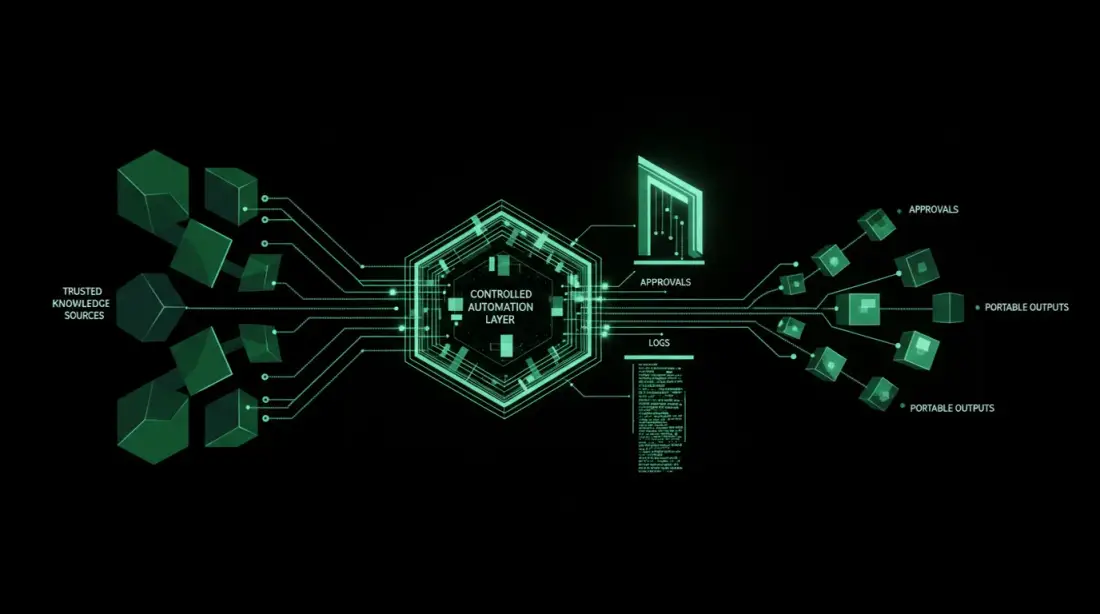
A sovereign business brain is not a single model. It is an architecture made of knowledge, process logic, permissions, logging, and portability. The model is one part. The value comes from the boundaries around it.
In practical terms, the architecture looks like this:
Sovereign digital headquarters
├── Sources
│   ├── Website forms, CRM, shared inboxes
│   ├── Project tools, document folders, knowledge pages
│   └── Accounting or capacity exports
├── Normalization
│   ├── Remove duplicates, classify document types
│   ├── Mark owner, freshness, and sensitivity
│   └── Archive or block outdated sources
├── Retrieval and workflow layer
│   ├── AI uses only approved sources
│   ├── Automations create summaries, tasks, or drafts
│   └── Workflows know states, deadlines, and handoffs
├── Control layer
│   ├── Role-based access
│   ├── Prompt, source, and output logs
│   └── Human approval for customer, finance, HR, and contract cases
└── Portability
    ├── Exportable documents and workflow definitions
    ├── Data-flow map, secrets inventory, recovery plan
    └── Understandable code and architecture state
The knowledge layer decides what AI may answer from. Sources are not simply dumped into a system. They receive metadata: owner, freshness, sensitivity class, language, validity scope, and workflow relationship. Without those labels, AI can mix old and new information with confidence.
The process and automation layer decides when AI acts. A good workflow does not fire actions blindly. It detects an event, retrieves approved context, creates a suggestion, shows sources, marks uncertainty, requests approval, and logs the result. That keeps AI supportive rather than autonomous in the wrong places.
The control layer decides who remains accountable. Customer-facing messages, financial steps, HR topics, and contract information need different review paths than an internal summary. Logs are not bureaucracy. They are how the company later understands why a suggestion was made and which source influenced it.
The portability layer decides whether the system becomes an asset or a dependency. If workflow definitions, data models, documentation, access concepts, and export paths are understandable, the company can replace vendors, move parts, or take over operations later. If everything lives inside proprietary click paths and private accounts, the next integration trap is already forming.

A pragmatic start: one workflow, not an AI program
Most SMBs do not need a large AI program. They need one workflow that is clear enough to become reliable. A strong first candidate is inquiry triage for service providers, agencies, trades businesses, or specialized B2B companies.
The starting point is realistic: inquiries arrive through website forms, email, or phone notes. Relevant information lives in service pages, old proposals, project examples, calendars, CRM contacts, and the heads of experienced people. The AI should not sell automatically. It should prepare internal work.
A first sovereign workflow can look like this:
- Inventory the sources that affect first replies: service descriptions, FAQ, proposal snippets, exclusions, project examples, and capacity rules.
- Clean the minimum viable knowledge base: remove outdated text, mark valid sources, assign owners.
- Route new inquiries into an internal queue.
- Let AI create a classification, summary, missing-question checklist, and draft reply from approved sources.
- Require a human to review, correct, and send. No automatic customer commitment.
- Log sources, decision, corrections, and outcome.
- Measure response time, completeness, correction rate, manual handoffs, and team trust.
This entry point is small enough to avoid a strategy paper, but concrete enough to test the architecture. You learn whether your knowledge base holds, whether the approval logic works, and whether the team trusts the system. After that, the digital headquarters can expand into proposal preparation, onboarding, document review, or internal search.
The principle is simple: make one workflow reliable first. Add more AI later. Not the other way around.
Planfold's perspective: work care-free, stay sovereign
Planfold does not build the digital headquarters as another tool someone on your team has to babysit. The approach is the care-free package: strategy, architecture, implementation, hosting, maintenance, documentation, monitoring, and continuous improvement belong together.
Convenience comes first. Your team should work faster, find knowledge more easily, handle handoffs cleanly, and spend less time on repeatable manual work. Sovereignty is the quality guarantee behind it: you keep the exit key. Data flows, workflows, code, documentation, and replacement paths remain understandable enough that you are not trapped by one vendor.
This fits the German market context. Bitkom's Open Source Monitor 2025 shows that many companies see openness and digital sovereignty as important signals. That does not mean every solution must be fully open source. It does mean inspectability, exportability, ownership, and replaceability are not side issues.
Planfold combines that position with precision AI, not mass-market slop. AI is introduced where verified context, clear controls, and measurable value meet. If the better next step is a process map, Planfold starts with the map. If the leverage point is an n8n workflow with human approval, it is built and documented properly. If the system later needs more client-side operation, the architecture remains understandable.
Related Planfold articles go deeper into the same theme. The shared lesson is simple: digital work becomes valuable when it is operated as a system.
The next step
If you want AI to become useful, do not begin with a tool list. Begin with the map: which tools, data flows, and knowledge sources already run the business? Which automations operate in the background? Which one workflow should become reliable next?

The Planfold Roadmap helps turn vague AI ideas into concrete next steps. If the first workflow is already clear, the map, knowledge base, and approval logic can become a managed digital machine.
Plan. Unfold. Stay Sovereign.
Related Posts
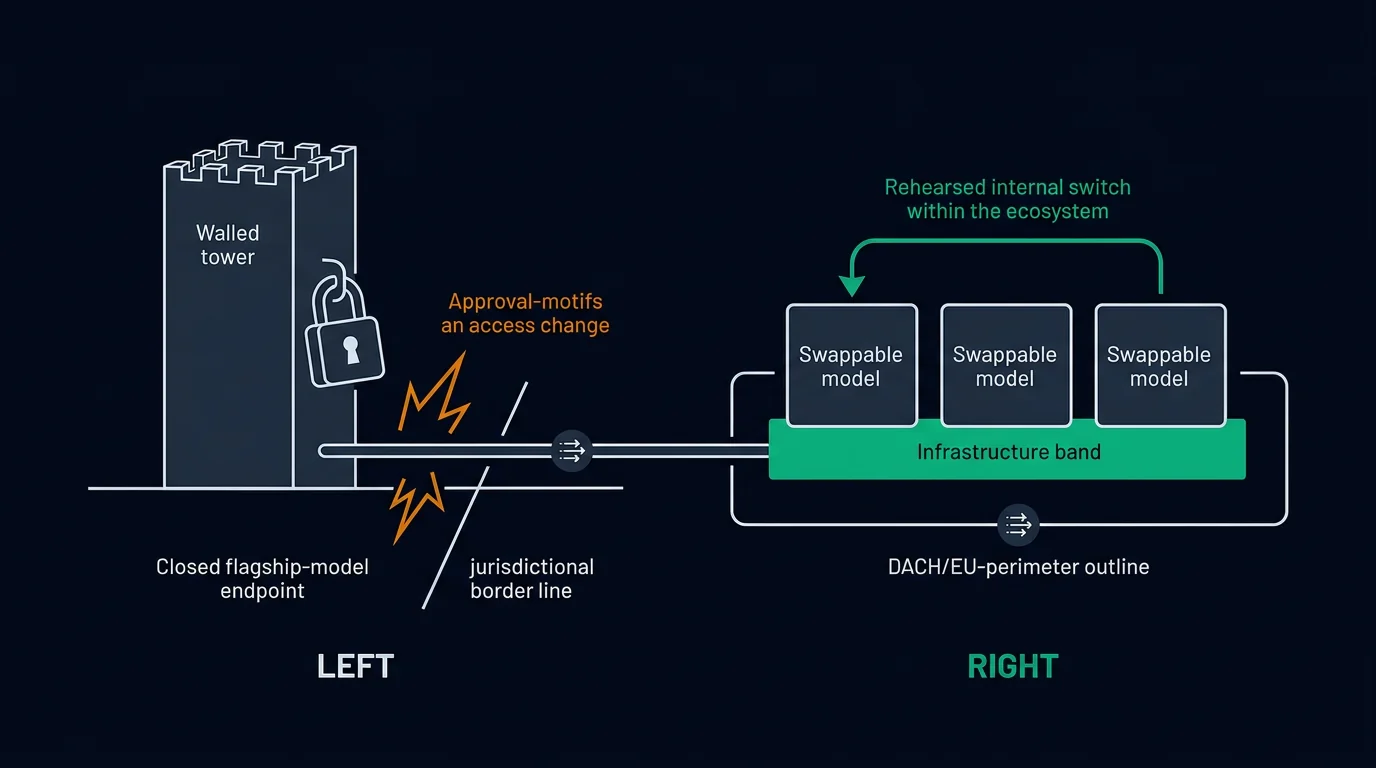
When a Foreign Government Gates Your AI Access: Sovereign AI Procurement as a Board-Level Risk for SMEs
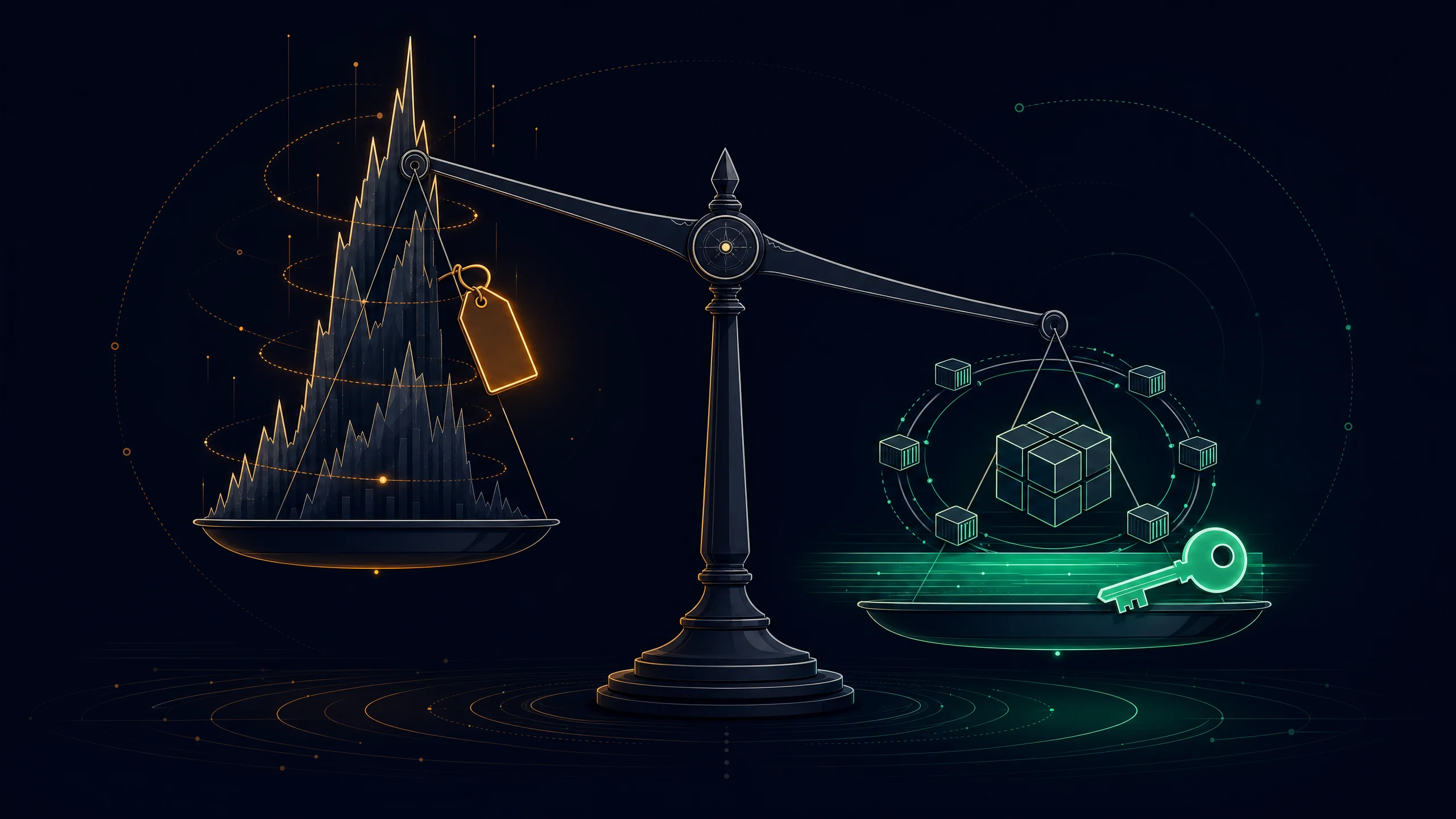
The Economics of Open-Weight AI: Why Self-Hosting Now Makes Business Sense for SMEs