AI Literacy: The Competitive Edge Before AI Becomes Risk
AI literacy is more than prompt training. Learn how SMEs can find shadow AI, enable teams, and turn uncontrolled AI use into governed workflows.
Contents
AI literacy is more than prompt training. Learn how SMEs can find shadow AI, enable teams, and turn uncontrolled AI use into governed workflows.
Share this article
The AI Problem Is No Longer Access. It Is Control.
In many companies, AI is already part of daily work, even when it is not part of the official operating model. A sales team drafts offer language. Support summarizes emails. HR tests an AI feature for job posts or application material. An assistant uses a public tool to structure internal notes. Each use looks practical, fast and productive.
Leadership often only sees the output. Nobody can say with confidence which customer data entered which tool, which sources the model used, whether the result was reviewed, or whether a suggestion later influenced a real decision. The company does not have too little AI. It has too little control over the AI it already uses.
That is why AI literacy becomes a competitive edge. Not as a certificate, and not as a one-off prompt course, but as an operating layer: people understand limits and risks, workflows define review and escalation, and systems preserve sources and decisions. Shadow AI then becomes less of a prohibition problem and more of a demand signal: teams need a safer approved path that is easier than uncontrolled copy-paste.
Workplace adoption data points in the same direction. In April 2026, Gallup reported that half of surveyed U.S. employees use AI in their role at least occasionally, and 13 percent use it daily. This is not DACH-specific data, but it shows the shape of the market: access is no longer the bottleneck. The bottleneck is the ability to embed AI into real business processes without losing data boundaries, quality or accountability.
What AI Literacy Actually Means for a Company
Article 4 of the EU AI Act does not describe AI literacy as vague awareness. Providers and deployers of AI systems must take measures to ensure that staff and other people acting on their behalf have sufficient AI literacy. The relevant level depends on the system context, role, experience, education and the people or groups affected by the AI system. Article 4 has applied since February 2, 2025; enforcement through national market surveillance becomes more practical from 2026 onward.
This is a practical business overview, not legal advice. Classification and obligations should be checked with legal and privacy counsel for the concrete system. Still, the operational conclusion is already clear: AI literacy is broader than high-risk AI. ChatGPT-style workplace use every day also requires understanding hallucinations, data leakage, role responsibility and human review.
A generic prompt course does not solve that. Prompting can be useful, but companies need more than better instructions to a model. They need data classes, approved tools, source checks, escalation rules, review points and a clear line between AI preparing work and humans making consequential decisions. BCG's 10-20-70 view of AI transformation fits this point well: the larger part of the work sits in people, processes and organizational change, not in the algorithm alone.
AI literacy therefore means a team can explain which AI systems it uses, which data may enter them, which outputs require skepticism, which tasks are not suitable for AI, and where decisions are documented. That is less spectacular than a new tool. It is also the condition that makes AI faster rather than riskier.
The Cost of AI Ignorance
Shadow AI rarely starts with bad intent. It starts because people want to solve a problem and the official path is missing. If the approved process is slow, company knowledge is scattered, and nobody has provided a safe AI workflow, the public browser tool wins. In the short term, it saves time. In the medium term, it creates rework, data risk and trust loss.
A 2024 CybSafe and National Cybersecurity Alliance study reported that 38 percent of surveyed workers had shared sensitive work information with AI tools without their employer's knowledge; more than half had not received training on safe AI use. The numbers should not be overdramatized, but they make the pattern visible: without clear rules, productivity becomes private and risk becomes collective.
The financial cost often does not appear as one dramatic incident. It appears as correction loops: AI-generated copy needs to be checked again because sources are missing. Offers are revised because the model blended old terms with current terms. Support replies sound plausible but include the wrong promise. A procurement questionnaire takes days because nobody can reconstruct which AI touched which data.
The time cost is especially unpleasant. Every unlogged AI shortcut can become a future investigation: who generated the text, which customer data was used, was the source current, who reviewed the answer, and was anyone affected by the result? The more AI helps day-to-day work, the more expensive it becomes to reconstruct evidence that was never captured.
Trust loss follows. Teams learn that AI output is not reliable and double-check everything. Leadership becomes reluctant to approve useful automation. Customers ask governance questions before the company has a coherent answer. In that state, AI is not leverage. It is another hidden operating uncertainty.
Diagnostic: Is Your Team AI-Literate or Just AI-Lucky?
An AI-literate organization is not defined by how many people use AI. It is defined by whether that use is explainable. There is an inventory of AI tools, a rule for data classes, a list of approved tools, named owners and a process for new use cases. Teams know not only what is allowed, but why.
The simplest test is a short AI-use inventory. Ask every team which AI touched work last week: research, summaries, images, writing, code, support, CRM, HR, document processing or meeting notes. Then add the operating questions: which data was used, was the tool approved, was the result reviewed, and did the output enter customer communication, employee-related decisions or another consequential action?
The warning signs are easy to recognize: AI use lives in personal accounts, outputs are reused without sources, customer data is copied into public tools, HR or finance processes have no special review, and nobody knows whether a SaaS feature is using AI in the background. Another warning sign is overcorrection: the company bans AI in general even though teams need it. That usually pushes usage further into the shadows.
A better diagnostic separates productivity from risk. Many AI uses are low-friction and still worth documenting. Others can, depending on context, touch high-risk categories or trigger additional transparency and oversight duties. The European Commission opened a consultation on draft high-risk classification guidance on May 19, 2026. That is another reason to start with inventory and literacy now instead of reconstructing classification from scattered local experiments later.
From Shadow AI to a Governed Workflow
The safe path starts before the model
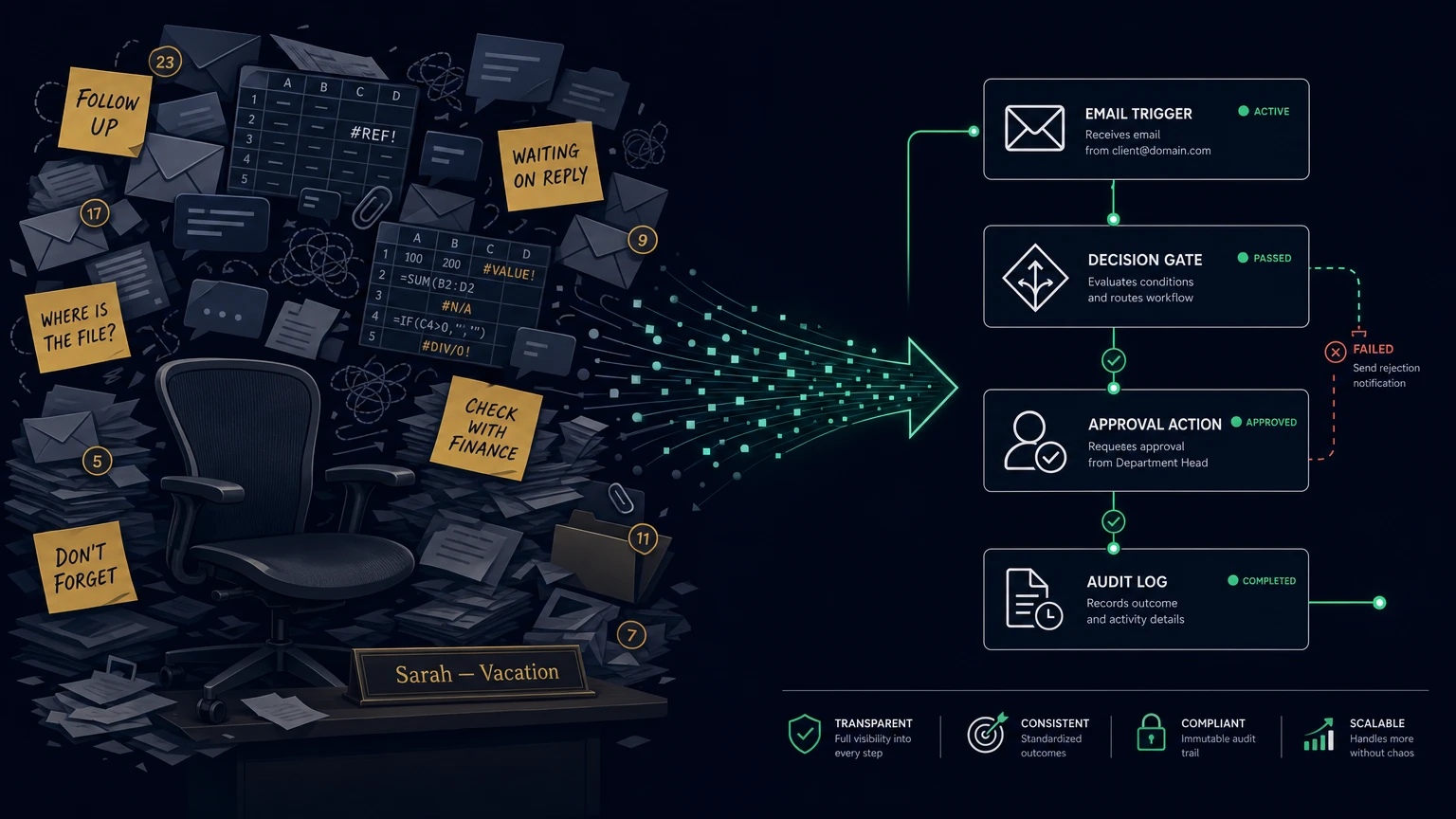
Imagine a 35-person services company that uses AI to prepare customer replies and qualify inbound requests. Before governance, staff paste email context into public tools. There is no shared prompt standard, no approved knowledge source and no record of which draft was reviewed. The owner only sees the final text.
After governance, the process starts with an AI-use map. Which requests may be drafted with AI? Which customer data is off limits? Which internal knowledge sources are approved? When must a human review the output? What happens when sources are missing or confidence is weak? These questions do not create a broad transformation program. They create one governed workflow.
Review becomes part of the workflow
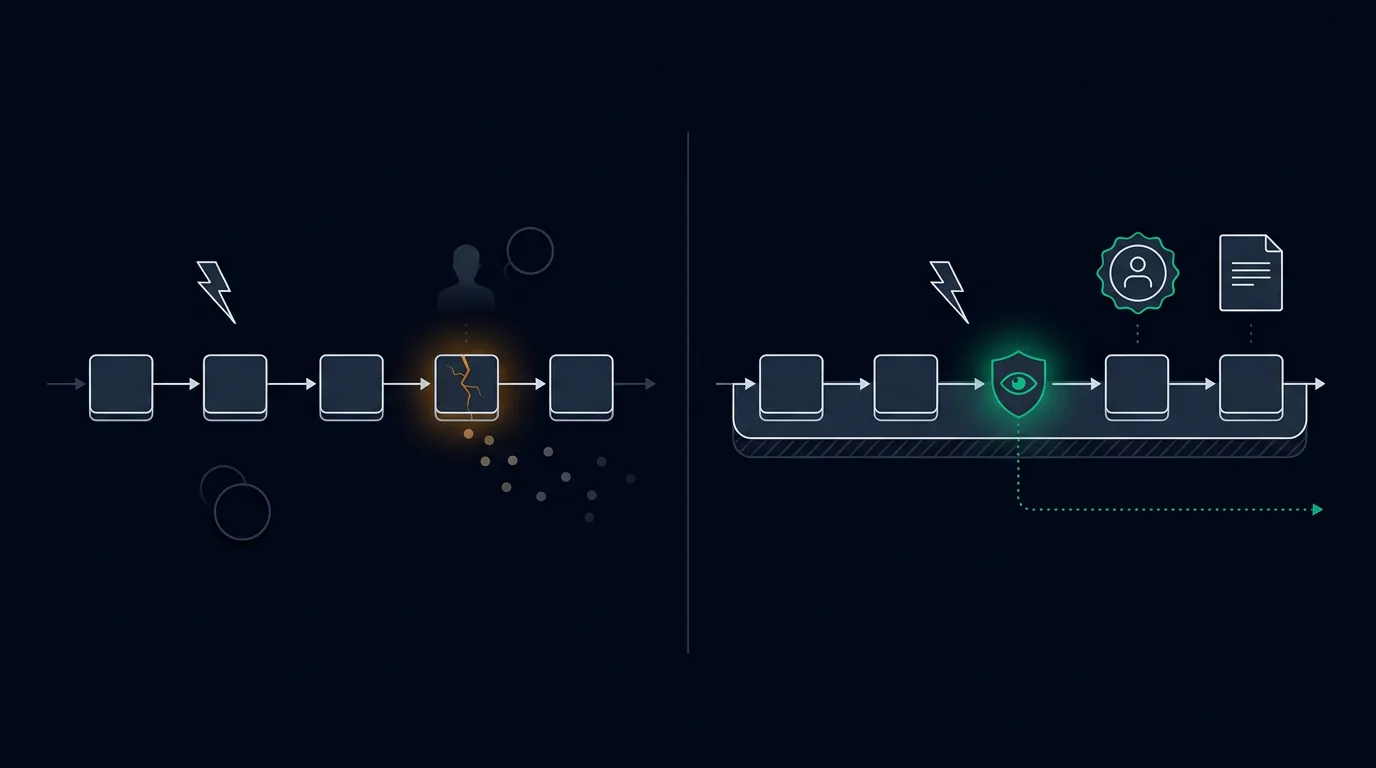
The difference is operational. The request enters a controlled workflow. AI uses approved knowledge sources instead of random copy-paste context. The draft appears with source cues and uncertainty signals. A human reviews, edits or rejects the suggestion. Only then does a message reach the customer or a record enter the CRM. The correction returns to the improvement log.
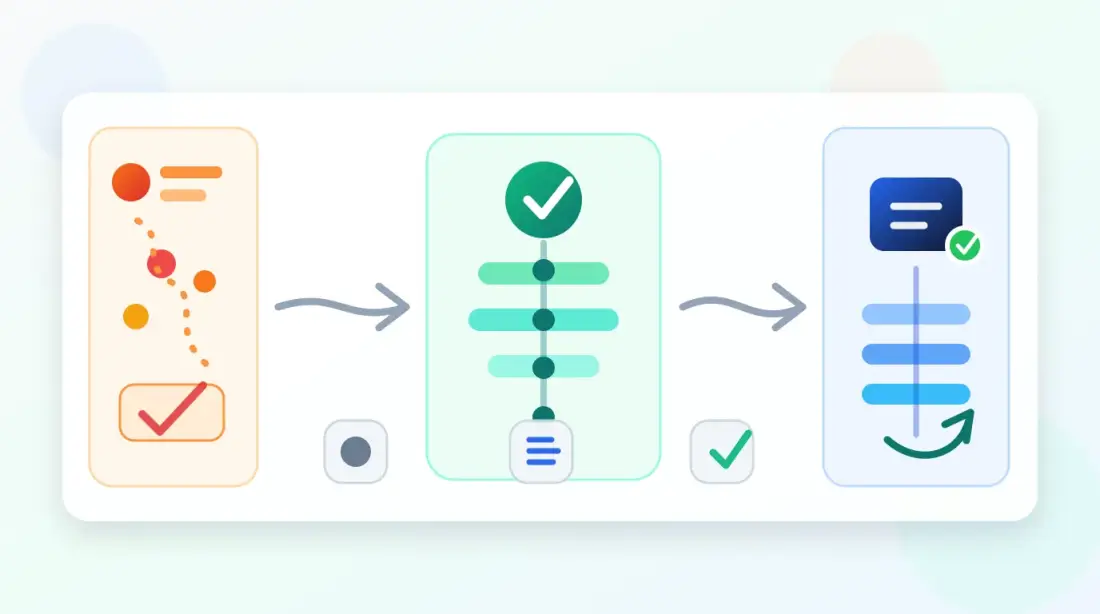
This example is intentionally modest. The point is not to replace a person with an agent. The point is to turn real demand for AI into a way of working that is faster than the old manual path and safer than the shadow path. That is where the competitive edge appears: not in the model itself, but in the ability to translate it into controlled work.
The Technical Operating Model: Knowledge First, Agent Second
Many companies jump straight to the agent. That sounds modern, but it skips the most important question: what may the agent access, and who owns that knowledge? Retrieval-augmented generation can improve answers, but only if the knowledge base has owners, freshness rules, permissions and review paths. Otherwise, AI simply retrieves structured confusion.
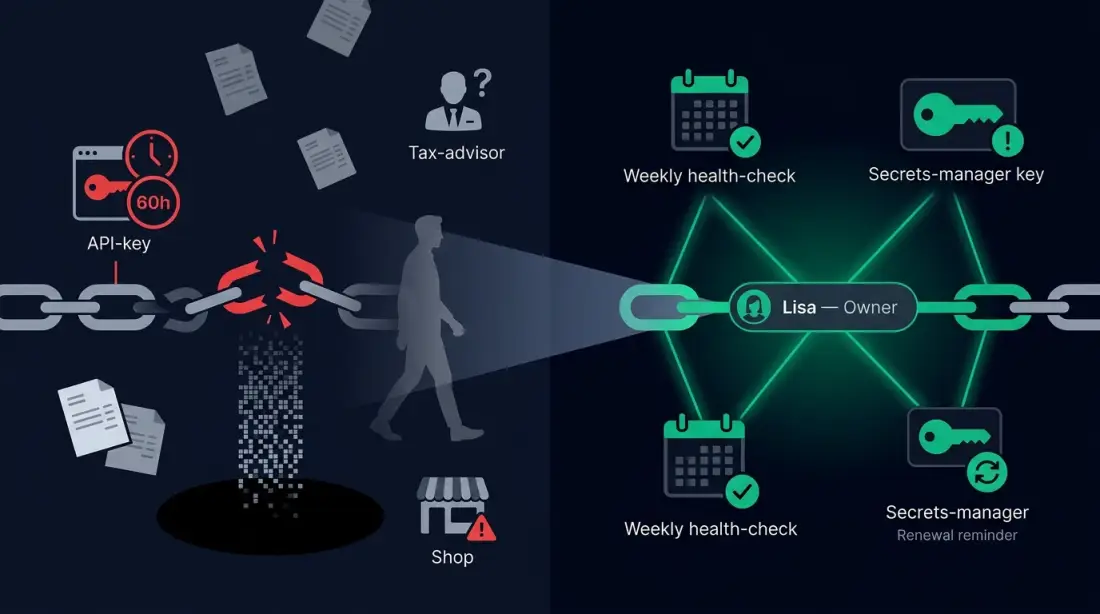
A reliable model starts with the knowledge layer. It contains approved documents, process rules, offer logic, product information, support answers and privacy boundaries. Every source needs an owner and a freshness date. Old content must not silently remain the truth. Permissions must reflect who is allowed to see what. With customer data, employee information and financial data, this is not a detail. It is the foundation.
The AI workflow comes next. It should make input, source, model call, result, review, action and feedback visible. If sources are missing, the workflow should say so. If an output has consequential effect, human review belongs before the action. If a result is corrected, the correction should not disappear into an inbox; it should become a learning signal for the operating model.
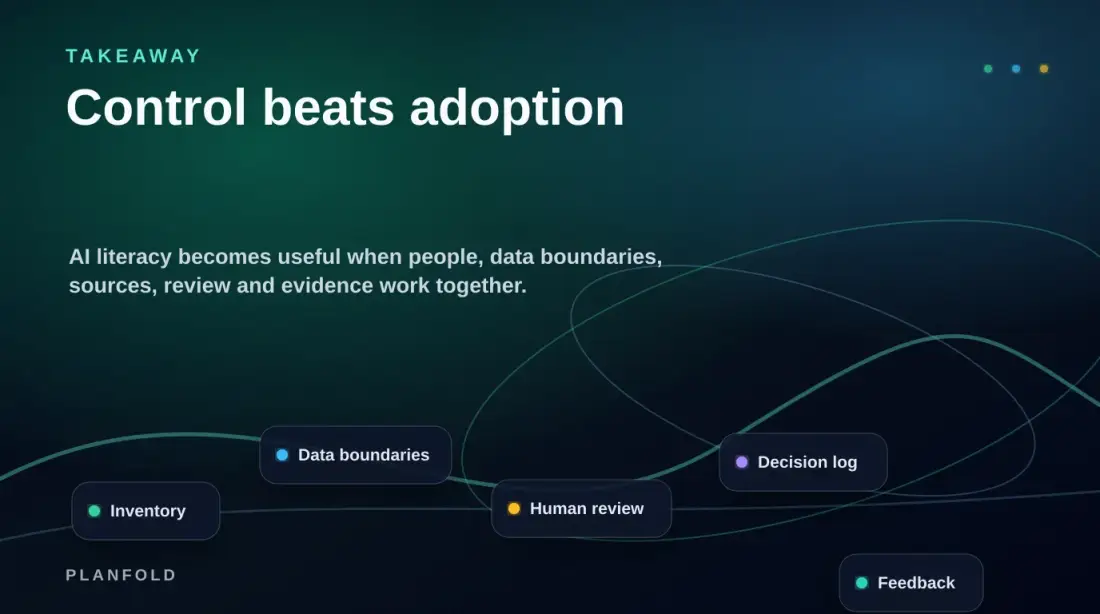
Human-in-the-loop does not mean a person exists somewhere in theory. It means review before external communication, approval for consequential decisions, escalation when source coverage is weak, special care where people are affected, and a record of the intervention. Only then does AI literacy become more than evidence that a training session happened.
The technical decision does not have to be always local or always global. Planfold's automation approach supports open orchestration, internal knowledge bases and swappable model providers. What matters is that the company keeps the exit key: data flows are documented, interfaces stay open, permissions are understandable and operations do not disappear into an opaque tool.
Planfold Perspective: Plan, Unfold, Resonate
Planfold does not treat AI literacy as an isolated training project. It belongs inside the Digital Headquarters: the place where work, knowledge, roles and automation come together. The question is not which AI tool to buy. The better question is which workflow should become more reliable with AI, and what control it needs.
Plan means inventorying AI use, making a first risk assessment, clarifying data classes, checking knowledge sources and naming owners. The output is not a glossy strategy. It is an operating map: where does AI already help, where does shadow AI appear, which use should be allowed, which needs boundaries, and which should stop?
Unfold means building one first workflow. Not the whole organization at once. One clear use case with approved sources, permissions, logs, a review point and a fallback is enough for a start. If that workflow is useful, teams choose it because it is easier than unsafe copy-paste.
Resonate means not ignoring corrections, exceptions and failed attempts. Which drafts were rejected? Which sources were missing? Where did a human have to intervene? Which data must never enter the process again? These signals improve the workflow without losing control.
The Next Step: Build AI Literacy into the Digital Headquarters
If you start now, do not begin with a broad training deck. Begin with an AI-use map and one workflow that touches customer data, internal knowledge sources or consequential decisions. Define which data may enter, which sources count, who reviews, what is logged and when a fallback takes over.
AI literacy then becomes concrete. Staff know how they may use AI. Leaders see which use cases are already happening. Customer questions become easier to answer. New AI tools are not approved by instinct, but by purpose, data, risk, review and exit path.
This is not a promise of legal compliance and not a shortcut around legal or privacy review. It is the operating foundation that makes those reviews cleaner in the first place. Plan. Unfold. Stay Sovereign.