The Planning Paradox: Why More Planning Leads To Faster Execution
Digital projects do not slow down because teams plan too much. They slow down when ownership, dependencies, scope, and evidence are unclear. Learn how lean planning speeds up execution.
Contents
Digital projects do not slow down because teams plan too much. They slow down when ownership, dependencies, scope, and evidence are unclear. Learn how lean planning speeds up execution.
Share this article
The moment planning starts to look slow
The pressure is familiar. The website update should ship, the CRM workflow should stop leaking context, the quote-preparation flow should be automated, and the AI support draft feels close enough to test. Nobody wants another planning meeting while customers are waiting and the backlog keeps growing.
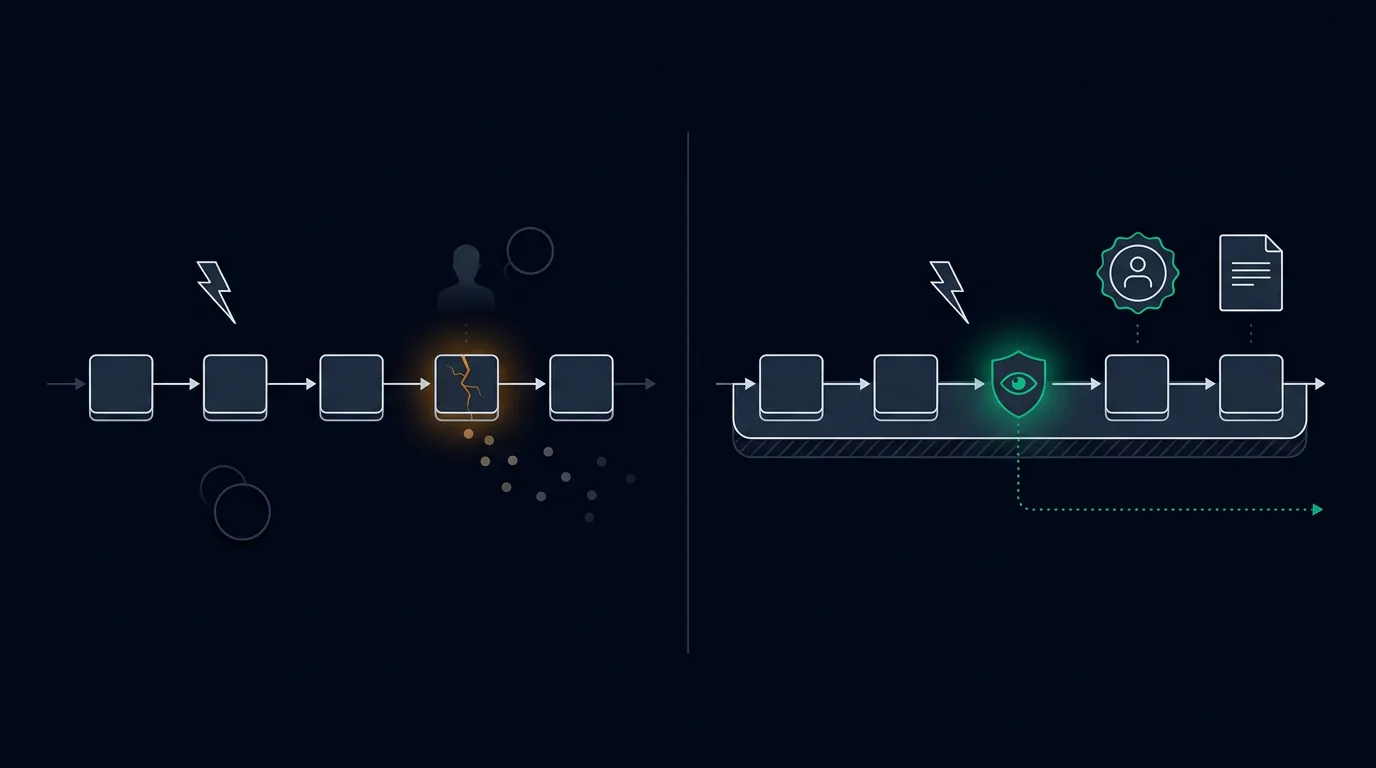
That is where the planning paradox starts. Teams skip planning to move faster. Then they lose more time because the source of truth, decision owner, exception path, approval rule, and feedback signal were never named. The first build feels fast. The repair loops do not.
For startups, SaaS teams, and technical operators, this is not a theoretical project-management issue. It becomes real when a founder has to answer the same implementation question three times, when a developer patches a flow without knowing the business rule, when sales does not trust the CRM status, or when an automation silently depends on one person's account.
Useful planning is not a 60-page strategy deck. It is an execution map. It decides what matters first, what is intentionally deferred, who owns decisions, which systems are touched, which risks need guardrails, and what the first production loop should learn from real usage.
Why digital projects actually slow down
Digital projects rarely slow down because a team mapped one workflow well. They slow down because core decisions appear after implementation has started. A field needs to change. A CRM state needs to be redefined. A workflow needs a human review step. A template was built from outdated positioning. A credential belongs to the wrong person.
The broader market context matters. Eurostat's digitalisation publication reports that in 2025 only 71 percent of EU SMEs reached at least basic digital intensity, still below the 2030 target. Tool adoption is real. Workflow maturity is not automatic.
The work was never mapped
A tool inventory tells you which systems exist. It does not explain how a request moves from website, inbox, CRM, qualification, quote preparation, approval, customer reply, and outcome logging. That path is where execution usually breaks.
The Object Management Group describes BPMN as a way to make process models understandable to business stakeholders while precise enough for technical implementers. You do not need an enterprise BPMN rollout. The useful point is simpler: business and technical teams need one shared language for triggers, data, decisions, handoffs, exceptions, and outcomes.
The decision owner was never named
Many projects do not stall on code. They stall on authority. Who decides whether a pricing exception is allowed? Who approves a customer-visible quote? Who owns the rule that an enterprise lead follows a different path? Who is accountable if the AI-generated draft is wrong?
Bitkom's 2026 research names long decision processes, missing time, missing financial means, skills shortages, data protection requirements, and technical security as digitalization hurdles for German companies. Owner clarity does not remove those constraints, but it prevents every exception from becoming a new meeting.
The system boundary was never drawn
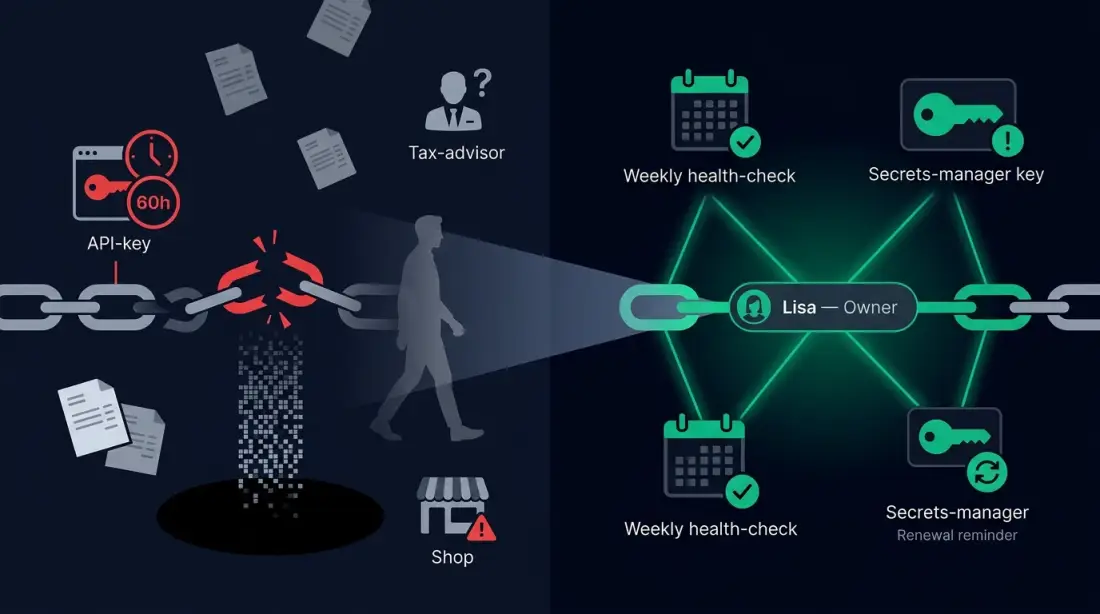
Websites, CRMs, quote templates, automation tools, and AI steps look like separate assets. In production, they share data, customer expectations, and operational responsibility. When nobody draws the system boundary, hidden dependencies appear: the wrong tool becomes the source of truth, a personal credential runs a critical path, or an AI step reads stale service copy.
A useful boundary names the source of truth, data class, credentials, approval point, monitoring signal, fallback, and export path. That sounds plain. It speeds up delivery because the build does not keep stopping for basic operating questions.
The cost of skipping the plan
Planning costs time up front. Weak planning spreads the same clarification across weeks. That is more expensive because the questions arrive inside customer work, support incidents, deployment windows, and team handoffs.
Picture a 22-person service company that wants to automate quote preparation. The first build connects a form, CRM, document template, and email tool. Four weeks later, edge cases appear: missing attachments, special pricing, outdated service copy, unclear approval rights, and no audit trail. The business did not lose time because it planned. It lost time because the decision map was missing.
Time cost: rework hides inside unclear decisions
PMI's work on requirements management links inaccurate requirements to many projects that fail to meet goals. That is not a Planfold outcome claim and not an SME-specific benchmark. It supports a practical point: when the source, owner, exception path, and success signal are not explicit, the same question returns later in more expensive form.
Rework often feels like normal coordination. Someone hunts for the current template. Someone else asks who can approve the quote. A developer updates the flow. Sales corrects the draft. The founder explains the same exception again. Each loop is small. Together they become the project.
Financial cost: tools arrive before the operating model
Buying a tool can feel like a decision. Sometimes it is only a substitute for one. The actual decision is still open: which workflow should improve, which data is authoritative, which exceptions need human review, and who operates the path after launch?
KfW Research reports that digitalization activity in the German Mittelstand has slowed and that only 30 percent of companies recently carried out digitalization projects. For constrained teams, planning has to reduce execution burden. It should help them pick fewer, better implementation bets instead of turning every idea into a tool rollout.
Trust cost: teams stop believing in digital change
The deepest cost is not always the immediate cleanup. It is the trust penalty. When a digital project creates unexpected manual work, the next one starts with less belief. People expect shadow spreadsheets, exception chaos, and more questions.
That is not resistance to progress. It is a rational response to systems that hide responsibility. Planning protects internal credibility by making sources, owners, and failure paths visible before the workflow reaches customers.
The planning map that makes execution faster
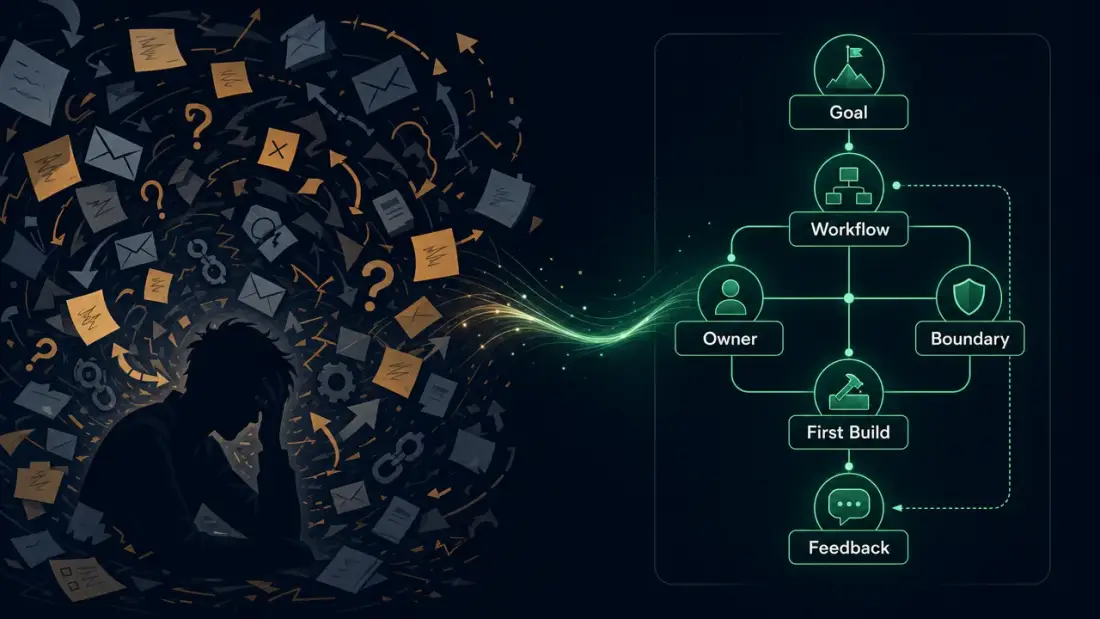
A useful planning map is small enough to use and concrete enough to guide implementation. It connects business goal, workflow, owners, system boundary, risk, first build, and feedback metric.
The point is not to know everything in advance. The point is to expose the decisions that become expensive when they stay implicit. That is where planning becomes execution infrastructure.
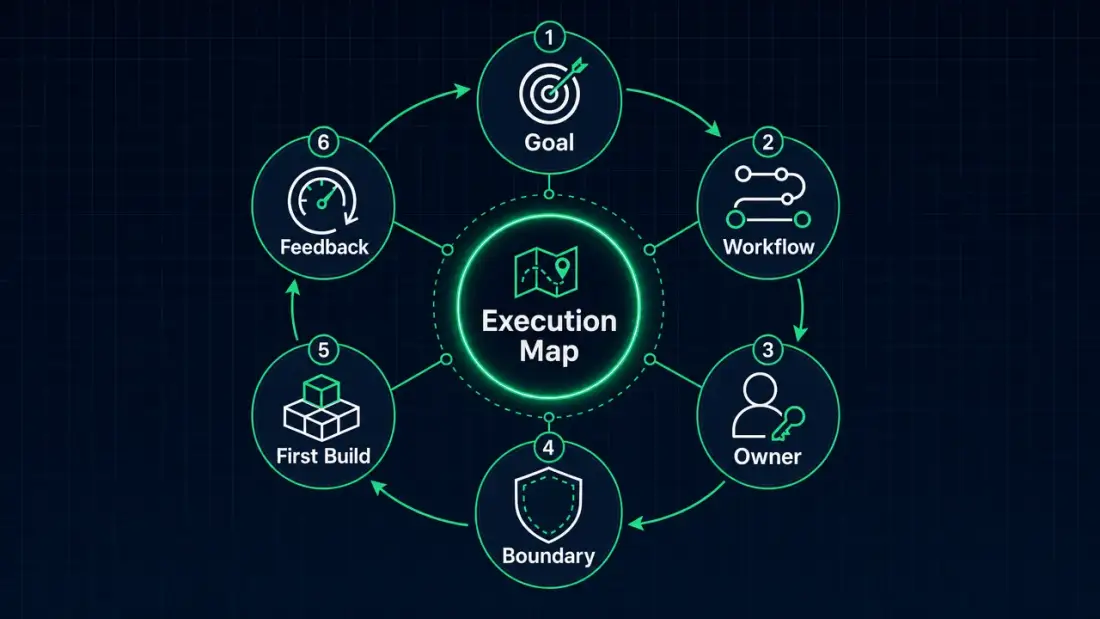
Workflow map
The workflow map captures trigger, required fields, source data, handoff, decision, exception, customer-visible outcome, and evidence. For quote preparation, that means: where does the request enter, what information must be complete, which source contains valid services and pricing, and when does a human approve the response?
The map does not need to be pretty. It needs to explain the work. If founders, operators, sales, and engineers describe the same path differently, the build is not ready.
Owner map
The owner map separates business rule ownership, technical implementation, and operations. One role owns the decision. Another builds or maintains the system. Another receives the signal when something fails. In a small team, one person may hold several roles, but the roles cannot stay invisible.
This matters even more when AI or automation creates drafts. The NIST AI RMF Playbook asks teams to understand context, purpose, deployment setting, requirements, users, impacts, and limits before measuring and managing AI systems. For lean teams, the practical translation is simple: decide what the AI step may do and where human review remains.
Risk and readiness score
Not every workflow is a good first candidate. Score it before you buy or build.
| Criterion | Question | Low-risk signal | Warning signal |
|---|---|---|---|
| Frequency | Does this happen every week? | Recurring and measurable | Rare or unclear |
| Source | Is there an authoritative source? | One system leads | CRM, docs, and inbox disagree |
| Exception load | How often do special cases appear? | Few documented cases | Many verbal rules |
| Sensitivity | Which data is touched? | Low customer sensitivity | Financial, HR, or contract data without boundaries |
| Reversibility | Can the workflow stop safely? | Manual fallback exists | Errors continue into customer-visible work |
| Feedback | How will quality be measured? | Correction rate, response time, completeness | Only "works" or "broken" |
Use case: from vague project idea to executable roadmap
Consider a 22-person consultancy. Thomas manages account relationships and approves all outgoing quotes. Petra coordinates client intake, tracks incoming requests, and qualifies leads before routing. Marcus is the sole developer who maintains their tools and patches automation gaps. Together, they want to improve lead handling, quote preparation, and follow-up speed. The old sequence starts with tools: CRM fields, email templates, AI drafting, and automation connectors. That creates motion, but not yet an operating path.
The Planfold-style sequence starts by choosing the customer journey that should become reliable first. A lead enters, Petra checks minimum context, the right account owner is assigned, Thomas or a colleague prepares a quote draft, approval happens, the reply goes out, and the outcome is logged. Only then does the team decide which step Marcus should automate first.
Before: motion without a decision map
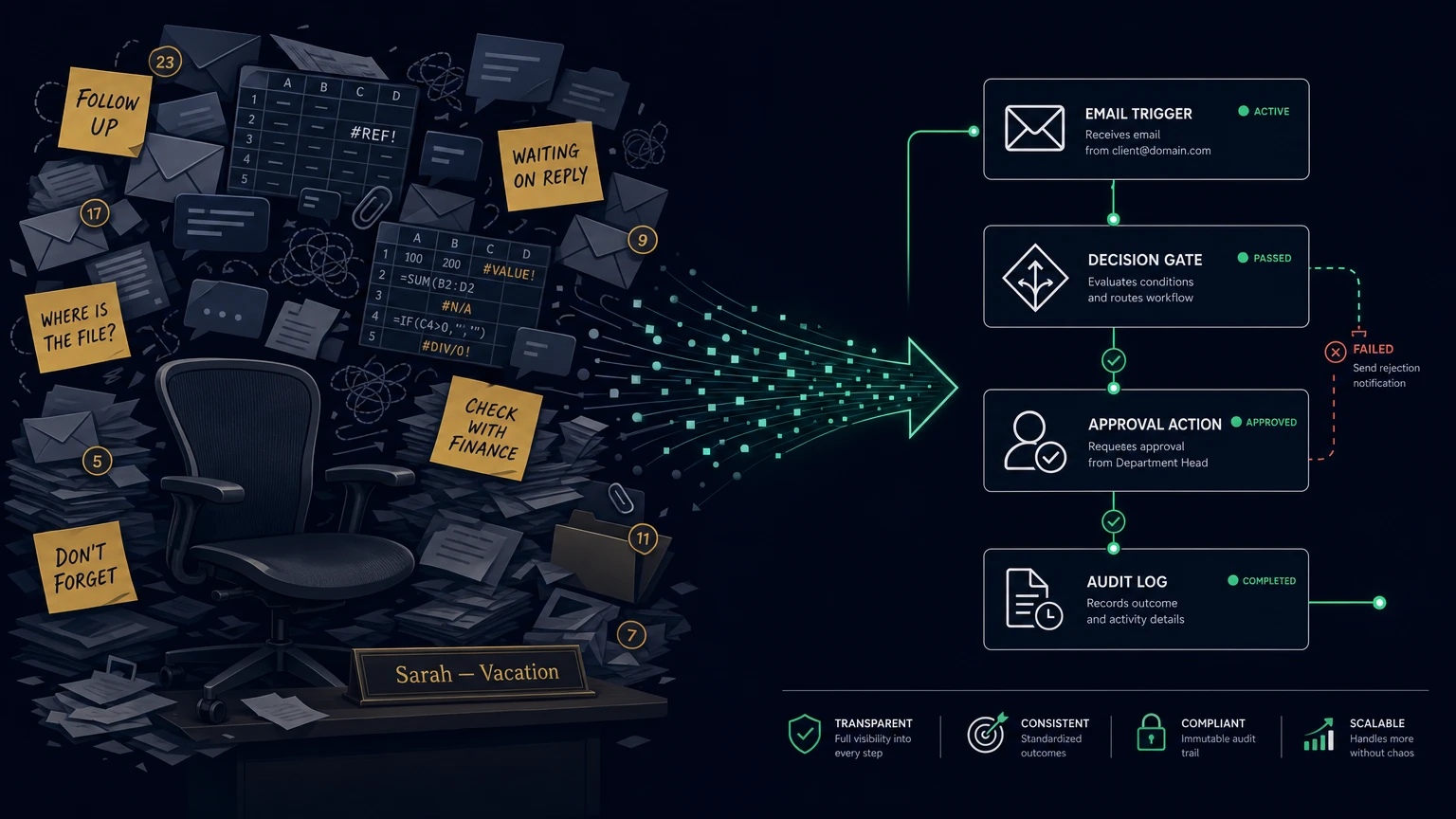
In the tool-first version, ownership gets blurry quickly. Missing attachments land on Petra as manual cleanup. Special pricing happens in chat with Thomas. Old service copy stays in templates that Marcus last updated six months ago. Approval rights are informal. There is no audit trail for why a quote draft was structured that way.
The team looks busy, but it does not execute faster. It keeps restarting because the workflow does not exist as an inspectable system — Thomas, Petra, and Marcus each carry a different mental model of the same process.
After: a roadmap that can be built
The roadmap narrows the first build to one frequent, bounded path: form intake, qualification, quote draft, approval, customer reply, and outcome logging. Thomas approves within a defined 24-hour window. Petra follows a single qualified-lead checklist. Marcus monitors the automation against measurable signals — response time, missing-field rate, draft correction rate, approval turnaround, abandoned requests, and team confidence.
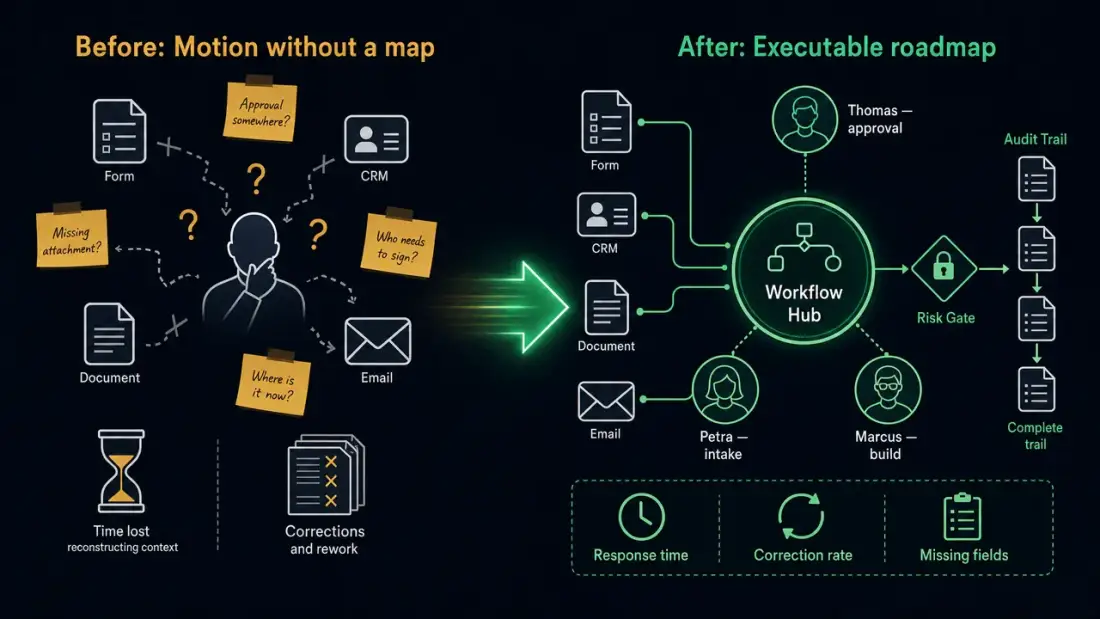
The roadmap does not remove all change. It makes change cheaper because the source, owner, fallback, and feedback signal stay visible. That is the difference between an automation experiment and an operating workflow.
How Planfold turns planning into the first delivery asset
Planfold does not treat planning as a kickoff exercise that disappears once implementation starts. The planning map is the first delivery asset. It records what will be built, why it matters, who decides, where the boundaries are, and what the first production loop should teach.
That connects directly to Planfold's method: Plan -> Unfold -> Resonate. Do not sell another tool first. Plan the digital machine, unfold the smallest reliable path, and improve it from operational feedback.
Plan: make the work visible
Plan means clarifying business goal, workflow, owners, source of truth, risks, and first implementation scope. For startups and SaaS teams, this is not heavyweight transformation planning. It is the clarity pass that keeps delivery from being interrupted by basic operating questions.
Unfold: build the smallest reliable path
Unfold means the first workflow is not maximal. It is reliable. Documented sources, managed credentials, failure paths, monitoring, handoffs, and a manual fallback are part of the implementation, not cleanup after launch.
That turns a tool connection into an operating asset. Planfold can run the care-free package around it while documentation, architecture, and exit paths stay understandable.
Resonate: learn from production
Resonate means the workflow improves from usage. Correction rate, response time, missing context, manual interventions, and team trust show what to improve next.
That is how a Digital Headquarters forms. Not through one large platform rewrite, but through repeated loops where the roadmap, workflow, owner, evidence, and automation decision stay connected.
A practical starting point for startups and SMEs
Do not start with the biggest vision. Choose one workflow that happens every week, creates visible drag, and is not too risky. Lead handling, quote preparation, support triage, onboarding, reporting, or invoice follow-up often beat a broad AI initiative as a first move.
The first workflow should be frequent enough to matter and bounded enough to keep errors visible. A narrow scope is easier to map, measure, and manage than a project that tries to solve every exception immediately.
Choose one weekly workflow that matters
Do not ask first which tool the team wants. Ask where status gets searched, where leadership repeats the same question, where data is copied manually, and where the team does not trust the current state.
Those questions usually find the first implementation candidate faster than a tool comparison. They show where planning creates real execution speed.
Write down five decisions before buying a tool
Before buying or building, answer five questions: what outcome should happen, which source is authoritative, who owns exceptions, which data is sensitive, and what would prove that the workflow improved?
The real outcome: faster execution with less drama
Planning does not create speed when it becomes process theater. It creates speed when it turns hidden decisions into visible implementation constraints early enough that the build can keep moving. That is planning as execution infrastructure.
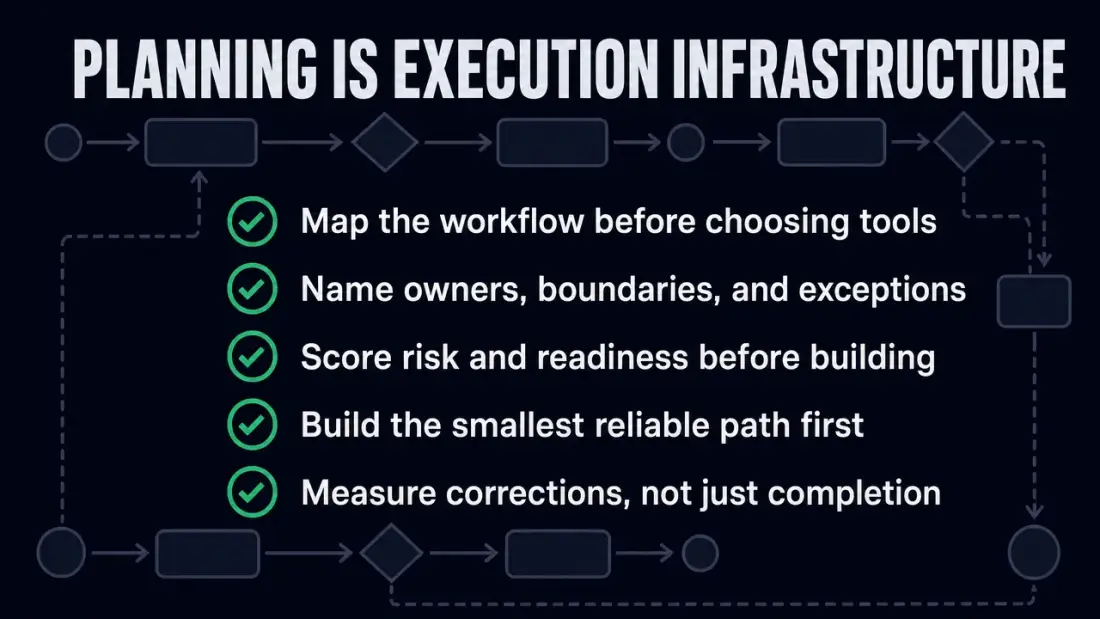
For startups, SaaS teams, and technical operators, the practical model is simple: one workflow, clear ownership, visible boundaries, a small reliable build, and a feedback signal. That is not a paper strategy. It is the first layer of a Digital Headquarters.
If you want to start today, take one project idea and do not begin with the tool list. Write down the customer journey, source, owner, exception, and success signal. Once that map exists, Planfold can turn it into a roadmap and the first reliable implementation path.